Solar Subsidy in Uttarakhand: Amount, Eligibility & How to Apply

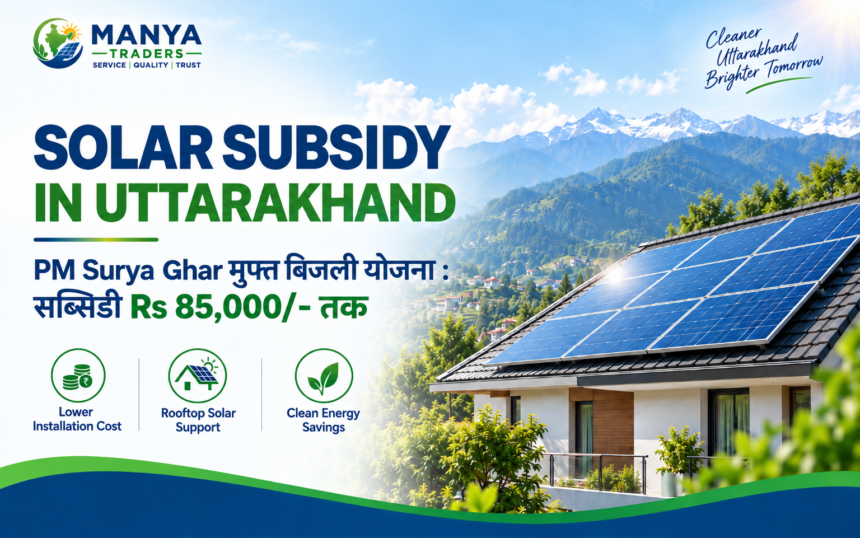
Going solar sounds like a smart move, but the cost can make you think twice. The good news is that the solar subsidy in Uttarakhand can reduce the upfront cost for eligible homeowners. So, how much can you actually get in 2026?
Eligible home consumers can get up to ₹85,800 in Central Financial Assistance (CFA) in 2026. This is under the PM Surya Ghar: Muft Bijli Yojana. It applies to an eligible rooftop solar system of up to 3 kW. Uttarakhand is included in the scheme’s special-category states, which have higher CFA rates than the standard category.
Many older articles miss an important Uttarakhand-specific point as well. The state ended its earlier extra subsidy of up to ₹51,000 for a 3 kW system. It stopped for new projects from 1 April 2025.
In 2026, the state is processing unpaid subsidy benefits. These benefits are for eligible projects. The projects must have started operating by 31 March 2025. UREDA continues to publish information on state subsidy disbursements.
How Much Solar Subsidy Is Available in Uttarakhand?
For eligible residential rooftop solar installations, the current PM Surya Ghar CFA rates for Uttarakhand are:
| Solar System Capacity | Central Subsidy |
|---|---|
| 1 kW | ₹33,000 |
| 2 kW | ₹66,000 |
| 3 kW | ₹85,800 |
| Above 3 kW | No additional CFA beyond the 3 kW limit |
The calculation is based on ₹33,000 per kW for the first 2 kW and ₹19,800 for the additional 1 kW. No additional central CFA applies for capacity above 3 kW for an individual residential system.
In simple terms:
1 kW: ₹33,000
2 kW: ₹66,000
3 kW: ₹85,800 maximum central CFA
To get the solar subsidy in Uttarakhand in 2026, ₹85,800 is the maximum central subsidy. It applies to eligible residential systems under the current CFA structure.
What Is PM Surya Ghar Muft Bijli Yojana?
PM Surya Ghar: Muft Bijli Yojana is the Government of India’s rooftop solar programme for residential electricity consumers. The scheme provides Central Financial Assistance to eligible residential consumers who install qualifying grid-connected rooftop solar systems. The subsidy depends on eligible solar capacity, not just on a discount from a solar company.
The basic idea is straightforward:
Install an eligible rooftop solar system → complete the required portal and DISCOM process → system is verified → eligible CFA is processed.
The scheme’s residential CFA is capped at 3 kW for one household. A homeowner can install a larger system if needed.
Why Is Solar Subsidy Higher in Uttarakhand?
The PM Surya Ghar CFA structure classifies Uttarakhand as a special-category state. That is why the central subsidy rates are:
- ₹33,000/kW for the first 2 kW
- ₹19,800 for the additional 1 kW
compared with the standard rates applicable to general-category states. This special-category treatment is important when calculating the cost of a residential rooftop solar system in Uttarakhand.
Solar Subsidy in Uttarakhand: 1 kW, 2 kW and 3 kW
1 kW Solar Subsidy in Uttarakhand
For an eligible 1 kW residential rooftop solar system:
1 × ₹33,000 = ₹33,000
So the maximum central CFA is ₹33,000.
2 kW Solar Subsidy in Uttarakhand
For a 2 kW system:
2 × ₹33,000 = ₹66,000
So the maximum central CFA is ₹66,000.
3 kW Solar Subsidy in Uttarakhand
For a 3 kW system:
First 2 kW: ₹66,000
Additional 1 kW: ₹19,800
Total = ₹85,800
This is why 3 kW matters for homeowners. It lets them use the full individual residential central subsidy.
What If You Install a 5 kW or 10 kW Solar System?
Many people think a bigger solar system means a bigger subsidy. But that’s not how the central CFA works. For residential consumers, the central government limits the subsidy to 3 kW. So:
- 3 kW → up to ₹85,800 CFA
- 5 kW → no additional central CFA for the extra 2 kW
- 10 kW → no additional central CFA beyond the eligible 3 kW
You can still install a 5 kW, 7 kW, or 10 kW system. Do this if your electricity use and property needs justify it.
Base the right system size on electricity usage, roof space, and future load—not on subsidy alone.
What Happened to the ₹51,000 Uttarakhand State Solar Subsidy?
This is one of the most important updates for anyone researching the Uttarakhand solar subsidy. Uttarakhand had an additional state subsidy of ₹17,000 per kW, which meant up to ₹51,000 for a 3 kW system. However, the state discontinued that subsidy component for new projects from 1 April 2025.
In March 2026, the Uttarakhand Cabinet decided to pay pending state subsidies. It applied to eligible solar projects that started operating by 31 March 2025. UREDA is helping distribute these pending subsidy payments.
Central vs State Subsidy: The Difference
| Benefit | Status for a New 2026 Installation |
|---|---|
| PM Surya Ghar Central CFA | Available to eligible residential consumers |
| Uttarakhand State Subsidy | Not available for new projects after 1 April 2025 |
| Old ₹51,000 State Subsidy | For eligible projects operational by 31 March 2025 |
Important: Do not deduct ₹51,000 from the cost of a new 2026 solar installation. Do this only if an updated government notice clearly says you are eligible.
Government subsidy policies can change, so checking the latest UREDA/official status before signing a quotation is always advisable. UREDA currently maintains a dedicated PM Surya Ghar state-subsidy status/disbursement section.
Who Is Eligible for Solar Subsidy in Uttarakhand?
The PM Surya Ghar residential CFA is for eligible consumers. They must have a local DISCOM electricity connection. They must install a qualifying rooftop solar system. You can install the system on your roof, terrace, balcony, or another eligible elevated structure. It must connect to your home electricity supply.
Before applying, make sure:
- You have an eligible residential electricity connection.
- The rooftop solar system meets the scheme’s technical requirements.
- The prescribed vendor process completes the installation.
- You correctly submit the required documents and system details.
- The installation passes the required DISCOM verification.
- The applicable module meets the Domestic Content Requirement conditions.
Always check eligibility against the latest scheme guidelines at the time of application.
Is Solar Subsidy Available for Commercial Properties?
This is another area where online information can be misleading. PM Surya Ghar’s residential CFA does not cover commercial and industrial electricity consumers. So if you are installing solar for a:
- Shop
- Office
- Factory
- Hotel
- Commercial building
- Industrial property
you should not simply subtract the residential PM Surya Ghar subsidy from the project cost. Commercial solar projects may have different policies, financing options, and regulatory arrangements.
How to Apply for Solar Subsidy in Uttarakhand
To know how to get a subsidy on solar panels, follow a few simple steps. If you also need help with site assessment, system design, documentation, and installation, you can explore our solar installation service.
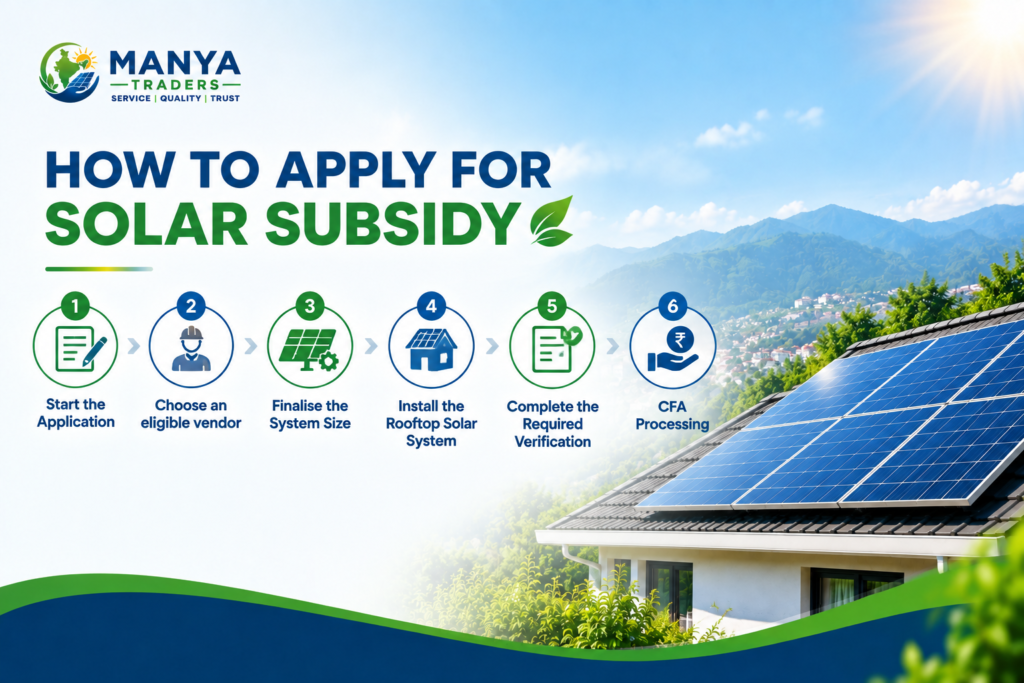
Step 1: Start the Application
Begin through the official PM Surya Ghar National Portal using your eligible residential electricity connection details. You associate the application with your consumer account, and you can track it through the prescribed portal process.
Step 2: Choose an Eligible Vendor
Select a vendor available through the scheme’s prescribed vendor process. Before finalising the installation, compare:
- Panel specifications
- Inverter
- Mounting structure
- Protection equipment
- Cabling
- Earthing
- Warranty
- Installation scope
- After-sales support
- Total project price
Do not compare quotations only by looking at the subsidy figure.
Step 3: Finalise the System Size
The installer should assess your:
- Monthly electricity consumption
- Rooftop area
- Roof orientation
- Shading
- Existing electrical setup
- Future electricity requirements
A 3 kW system may maximise the central subsidy. But it is not always the right system for every household.
Step 4: Install the Rooftop Solar System
The team installs the system according to the applicable technical and safety requirements. The installation normally includes components such as:
- Solar PV modules
- Solar inverter
- Mounting structure
- DC/AC protection
- Cables
- Earthing
- Other required electrical equipment
Step 5: Complete the Required Verification
After installation, the required documentation and system details are submitted through the prescribed process. The DISCOM completes the required verification and metering-related formalities.
Step 6: CFA Processing
Once you complete all required approvals and conditions, the scheme processes the eligible central subsidy as per its rules. The timeline can vary based on documents, installation, inspection, and DISCOM processing. So, don’t treat any quoted subsidy date as guaranteed.
What Documents Are Required for Solar Subsidy?
The exact requirements may depend on the application and the current portal process. Homeowners should generally keep the following ready:
- Electricity bill
- Electricity consumer/account number
- Required identity details
- Bank account details
- Bank proof where required
- Rooftop solar system details
- Vendor and installation details
- Required photographs
- Other documents requested during the application
Make sure your electricity connection and submitted personal/bank information are accurate and consistent. A small mismatch can create unnecessary delays.
Does Solar System Size Affect the Subsidy?
Yes. The central CFA links to eligible solar capacity. For Uttarakhand:
First 2 kW: ₹33,000/kW
Additional 1 kW: ₹19,800/kW
Beyond 3 kW: No additional central CFA
| System | Maximum Central CFA |
|---|---|
| 1 kW | ₹33,000 |
| 1.5 kW | ₹49,500 |
| 2 kW | ₹66,000 |
| 2.5 kW | ₹75,900 |
| 3 kW | ₹85,800 |
| 4 kW | ₹85,800 |
| 5 kW | ₹85,800 |
The calculation for partial capacities follows the applicable per-kW CFA structure.
Should You Install 3 kW Just to Get the Maximum Subsidy?
Not necessarily. The maximum subsidy should not be the only factor deciding your system size. For example:
A smaller home
If your monthly electricity consumption is relatively low, a 1 kW or 2 kW system may be sufficient.
A typical family home
A 2 kW or 3 kW system may be more appropriate depending on electricity usage and available roof area.
A high-consumption home
If you use multiple air conditioners, an EV charger, water pumps, or other high-load appliances, you may need more than 3 kW. You can install a larger system. But any capacity above the eligible 3 kW does not receive extra central CFA.
Choose the solar system for your electricity requirement first and the subsidy second.
Solar Subsidy in Dehradun and Other Parts of Uttarakhand
The PM Surya Ghar central subsidy is a central scheme. Eligible residential consumers across Uttarakhand can apply, subject to the scheme’s conditions. This includes homeowners in areas such as:
- Dehradun
- Haridwar
- Rishikesh
- Roorkee
- Haldwani
- Rudrapur
- Kotdwar
- Nainital
- Other areas served by the applicable electricity distribution network
For local implementation, your electricity connection, DISCOM process, and technical requirements matter. UPCL also publishes domestic subsidy reports for Dehradun Urban and Dehradun Rural. These reports show that solar subsidy processing continues in the state.
What Does the Solar Subsidy Actually Reduce?
The government subsidy lowers the cost of an eligible solar installation. It does not mean the government pays for every part of your project. Your total solar project cost may include:
- Solar panels
- Inverter
- Mounting structure
- Electrical protection
- Cabling
- Earthing
- Installation
- Labour
- Net-metering-related work
- Civil or structural work, where required
- Additional site-specific requirements
That is why the best way to compare quotations is to look at:
Total installed price − applicable subsidy = effective investment
rather than comparing only the headline subsidy.
Why Can Two Solar Quotes Be Different?
Suppose two homeowners are both installing 3 kW solar systems. Their final quotations can still be different because of:
- Panel technology
- Panel brand and specifications
- Inverter quality
- Mounting structure
- Roof height
- Cable length
- Electrical protection
- Earthing requirements
- Civil work
- Installation complexity
- Warranty and service terms
A lower quotation is not automatically a better quotation. Before choosing an installer, ask for a clear breakdown of the equipment, installation scope, warranties, and applicable subsidy assumptions.
Common Mistakes to Avoid When Applying for Solar Subsidy
1. Assuming the ₹51,000 state subsidy is available for new installations
Don’t include this subsidy in the cost calculation for a new 2026 project. It mainly applies to eligible older projects that became operational by 31 March 2025.
2. Choosing a system only because of the subsidy
Maximum subsidy does not necessarily mean maximum savings. Your electricity consumption should determine the system size.
3. Comparing only the final price
Check the complete technical specification and installation scope.
4. Ignoring rooftop conditions
Shading, roof orientation, available area, and structural conditions can affect actual solar generation.
5. Not checking the vendor and documentation process
The subsidy process involves prescribed vendor, installation, documentation, and verification requirements.
6. Using outdated subsidy information
Solar subsidy articles from 2024 or 2025 may not reflect the current Uttarakhand state-subsidy position. Always verify the latest official information before making a financial decision.
Is Solar Subsidy Worth It in Uttarakhand?
Yes, for an eligible homeowner. But the subsidy is only one part of the total benefit. A good rooftop solar system can also reduce your electricity costs over time. The actual savings depend on:
- Your electricity consumption
- Solar system size
- Rooftop conditions
- Solar generation
- Electricity tariffs
- System quality
- Maintenance
- Installation quality
- How much of your generated electricity you actually use
The subsidy lowers the initial investment. The electricity generated over the life of the system creates the longer-term savings.
That is why it is important to choose the right size system. A professional should install it. This matters more than choosing the system with the highest subsidy.
Why Manya Traders for Rooftop Solar in Uttarakhand?
Solar installation is more than just putting panels on your roof. You need to consider your electricity use, roof space, system size, equipment, installation needs, and government rules.

Manya Traders helps homeowners choose the right solar system based on their needs. Whether you plan rooftop solar in Dehradun or anywhere in Uttarakhand, pick a system that fits your home. Choose one that matches your power needs, not just the biggest subsidy. A good solar installation should give you:
- The right system capacity
- Suitable solar panels and inverter
- Proper rooftop assessment
- Clear installation pricing
- Guidance on the applicable subsidy process
- Proper documentation
- Reliable installation and after-sales support
FAQ: Solar Subsidy in Uttarakhand
How much solar subsidy is available in Uttarakhand in 2026?
Eligible home consumers can get up to ₹85,800 in central financial assistance. This support is for a rooftop solar system up to 3 kW under PM Surya Ghar. Uttarakhand receives the special-category CFA rate of ₹33,000/kW for the first 2 kW and ₹19,800 for the additional 1 kW.
What is the solar subsidy for 1 kW in Uttarakhand?
The central subsidy for an eligible 1 kW residential rooftop solar system is ₹33,000.
What is the solar subsidy for 2 kW in Uttarakhand?
An eligible 2 kW residential system can receive up to ₹66,000 in central subsidy.
What is the subsidy for a 3 kW solar system in Uttarakhand?
The maximum central subsidy for an eligible 3 kW residential system is ₹85,800.
Does a 5 kW solar system get more than ₹85,800 subsidy?
No. The central CFA does not increase beyond the eligible 3 kW capacity for residential systems. You can still install a 5 kW system if you need it for your electricity use.
Is the ₹51,000 Uttarakhand state solar subsidy available in 2026?
No, not for new projects installed after 1 April 2025. The state is processing pending subsidy benefits for eligible projects that became operational by 31 March 2025.
Can I get PM Surya Ghar subsidy for a commercial property?
PM Surya Ghar provides the residential CFA to eligible residential consumers, not commercial or industrial consumers.
How do I apply for solar subsidy in Uttarakhand?
Residential consumers can apply for solar subsidy eligibility through the PM Surya Ghar process. They can choose a registered vendor and install the system. They must complete the required documents. They also undergo DISCOM verification before receiving the CFA.
Can I install more than 3 kW of solar?
Yes. You can install a larger residential system if you need more power. However, the central CFA does not increase beyond the eligible 3 kW capacity.
Is solar subsidy available in Dehradun?
Eligible residential consumers in Dehradun can get the PM Surya Ghar residential CFA if they meet the scheme requirements. UPCL also publishes domestic subsidy reports for Dehradun Urban and Dehradun Rural. You can also read our guide to solar panel installation in Dehradun to understand the installation process.
Does solar subsidy cover the complete installation cost?
No. The subsidy is financial assistance toward an eligible rooftop solar installation. The homeowner may still have to pay the remaining system and site-related costs.
Is PM Surya Ghar subsidy available for off-grid solar?
The residential CFA applies to eligible rooftop solar systems. You must connect these systems to the grid. They must use the required electricity connection and DISCOM process. Do not assume that a fully off-grid system qualifies for the residential CFA.
Should I choose 3 kW because it gets the maximum subsidy?
Not always. Choose a system based on your electricity use, roof space, and future needs. The highest subsidy may not always give the best financial benefit for your home.
Final Takeaway
If you are searching for a solar subsidy in Uttarakhand, the key figure for 2026 is up to ₹85,800. This is Central Financial Assistance under PM Surya Ghar for eligible residential systems up to 3 kW.
The calculation is:
₹33,000 × first 2 kW + ₹19,800 for the third kW = ₹85,800
The earlier Uttarakhand state subsidy was up to ₹51,000. Do not count it for a new solar installation in 2026. The state is currently processing pending benefits for eligible projects that became operational by 31 March 2025.
Before installing solar, look at more than just the subsidy. Check your electricity use, roof condition, system size, equipment quality, installation work, warranty, and long-term service.
The best solar system is not the one with the biggest subsidy. The one that fits your home, electricity consumption, and long-term energy needs.
If you plan rooftop solar in Dehradun or elsewhere in Uttarakhand, Manya Traders can help. They explain your system needs, installation options, and the subsidy process before you invest.