PM Surya Ghar Yojana in Uttarakhand: Make Your Roof Solar
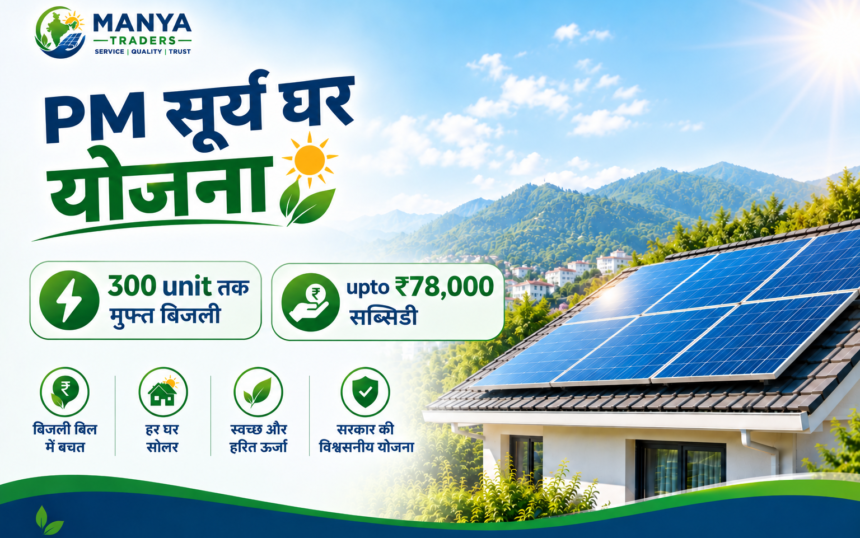
Your roof could be more than just a roof; it could help power your home. The PM Surya Ghar Yojana in Uttarakhand helps eligible homeowners install rooftop solar. It also lowers upfront costs through Central Financial Assistance (CFA).
Eligible residential consumers in Uttarakhand can get up to ₹85,800 in central CFA for a 3 kW system. But the subsidy does not increase beyond 3 kW. So, choose the right system by balancing your electricity needs with the subsidy you can get.
What Is PM Surya Ghar Yojana?
PM Surya Ghar: Muft Bijli Yojana is a Government of India rooftop solar scheme. It gives financial support to eligible homeowners who install grid-connected rooftop solar systems. The Ministry of New and Renewable Energy (MNRE) runs the scheme.
You can apply and complete the main steps through the PM Surya Ghar portal. The local DISCOM also plays an important role. Your solar system must follow the DISCOM process and pass the required verification.
For a homeowner, the basic idea is fairly simple:
Choose the right rooftop solar system → apply through the official process → select an eligible vendor → install the system → complete DISCOM verification and metering requirements → receive the applicable CFA after the required approvals.
That last part is important. The subsidy is not simply an instant discount that anyone gets after buying solar panels. You have to complete the installation, documentation, and verification process correctly.
What Does PM Surya Ghar Offer in Uttarakhand?
Uttarakhand comes under the special-category state rate used for the residential CFA calculation. Under the current guidelines, eligible consumers receive:
- ₹33,000 per kW for the first 2 kW
- ₹19,800 for the third kW
- No additional central CFA beyond 3 kW
So, the maximum central CFA for an individual eligible residential installation is ₹85,800 at 3 kW. The scheme therefore has two separate questions you should ask:
- How much subsidy can I receive?
- What solar capacity actually makes sense for my home?
People often overlook the second question.
Who Is Eligible for PM Surya Ghar Yojana in Uttarakhand?
PM Surya Ghar eligibility applies to home electricity users who install a rooftop solar system. The system must meet the scheme requirements. Simply having a roof and wanting solar does not guarantee a subsidy.
For a typical homeowner in Uttarakhand, the main points are:
You need an eligible residential electricity connection
You need to link your application to your electricity consumer details and follow the local DISCOM process.
For many households in Uttarakhand, Uttarakhand Power Corporation Limited (UPCL) handles electricity distribution and the grid-connected rooftop solar process. UPCL also publishes PM Surya Ghar and rooftop/net-metering documents.
Your rooftop solar system must meet scheme requirements
The scheme covers eligible grid-connected rooftop solar installations. The installation and equipment must comply with the applicable technical requirements for CFA eligibility.
You need to use an eligible registered vendor
Check this before you pay an installer. Under the PM Surya Ghar process, consumers choose vendors registered on the National Portal. Installing solar through any local contractor does not automatically make the project eligible for the central subsidy.
The installation has to pass the required process
After installation, the relevant system details and documents are submitted. You must complete the DISCOM verification, metering, and other required portal steps before CFA processing.
PM Surya Ghar Subsidy in Uttarakhand: How Much Can You Get?
For eligible residential rooftop solar installations in Uttarakhand, the current central subsidy works like this:
| Solar System Size | Central CFA |
|---|---|
| 1 kW | ₹33,000 |
| 1.5 kW | ₹49,500 |
| 2 kW | ₹66,000 |
| 2.5 kW | ₹75,900 |
| 3 kW | ₹85,800 |
| 4 kW | ₹85,800 |
| 5 kW | ₹85,800 |
The important point is that ₹85,800 is the maximum individual central CFA under this residential structure. Once the eligible capacity reaches 3 kW, adding more capacity does not add more central CFA.
Why Does the Subsidy Stop Increasing After 3 kW?
The scheme gives CFA at one rate for the first 2 kW and a lower rate for the third kW. You do not get any additional central CFA beyond 3 kW. However, you can still install a 4 kW, 5 kW, or larger solar system if you need it. You just won’t get extra central CFA for the additional capacity.
So, don’t choose a system only because it offers the maximum subsidy. A 3 kW system may work well for one home but may be too small or too large for another.
Is the ₹51,000 Uttarakhand State Subsidy Still Available?
This is where many older articles can be confusing.
Uttarakhand offered a separate state subsidy under PM Surya Ghar. It was ₹17,000 per kW, up to ₹51,000 for 3 kW. However, you should not add this ₹51,000 to the central CFA when calculating the subsidy for a new 2026 installation.
UREDA publishes PM Surya Ghar state-subsidy updates and disbursement details on its website. So, you may still see ₹51,000 in official records. But these amounts may relate to projects that qualified under earlier state-subsidy rules.
For a new project, check the current UREDA rules before adding any state subsidy to your calculations. For now, use ₹85,800 as the central CFA for an eligible 3 kW home system. Use this amount unless UREDA confirms an extra state benefit for your project.
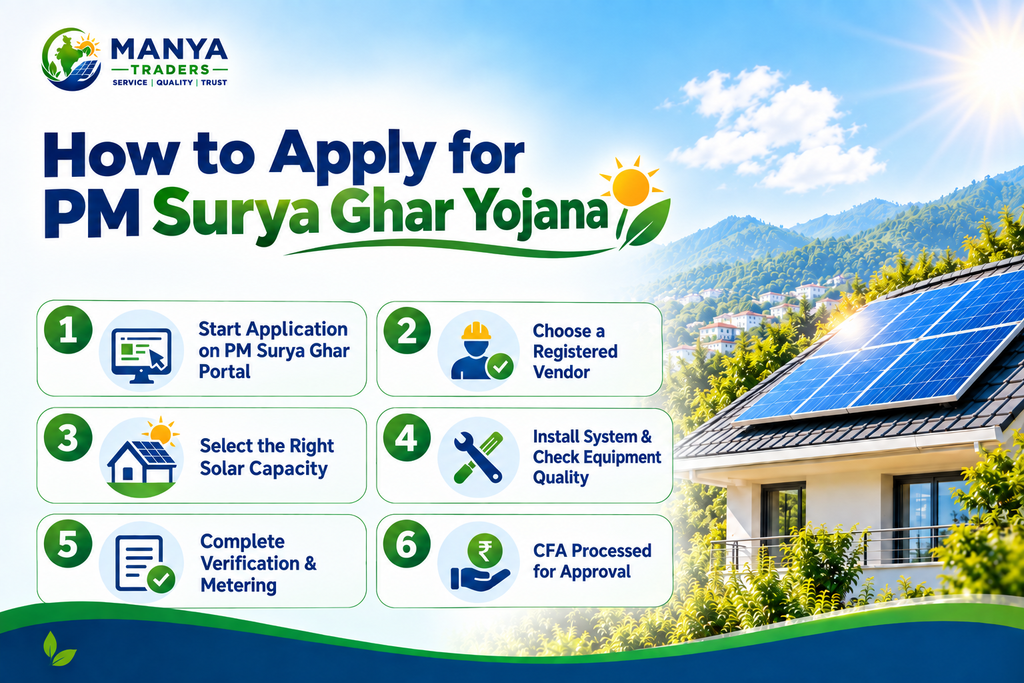
How to Apply for PM Surya Ghar Yojana Online
The PM Surya Ghar Yojana online application process starts through the official National Portal. The exact portal screens can change, but the overall process follows a clear sequence.
Step 1: Start Your Application
Start your application on the official PM Surya Ghar portal using your electricity connection details. Keep your consumer information ready before you begin. Enter the details carefully because the authorities will verify them against your electricity account.
Step 2: Select a Registered Vendor
Once you can proceed with your application, choose a PM Surya Ghar registered vendor. Check the vendor’s eligibility before you hire them. Don’t choose an installer first and check the scheme requirements later.
Step 3: Decide the Right Solar Capacity
This is where you should look beyond the subsidy. Check:
- Your recent electricity consumption
- Monthly electricity bills
- Available rooftop area
- Roof orientation
- Shading from trees or nearby buildings
- Existing electrical setup
- Future electricity requirements
For some homes, 1 or 2 kW may be enough. Others may benefit from 3 kW or more. The maximum subsidy being available at 3 kW does not mean every household should install exactly 3 kW.
Step 4: Complete the Installation
The selected vendor installs the rooftop solar system as per the scheme and DISCOM requirements. Check the equipment quality before installation. Your quotation should clearly list the panels, inverter, mounting structure, protection equipment, wiring, earthing, and other included components.
Step 5: Complete Verification and Metering
After installation, submit the required details and documents through the prescribed process. The DISCOM then verifies the system. Complete the required metering or approved metering process for the grid-connected system.
In Uttarakhand, UPCL continues to publish information about PM Surya Ghar and rooftop solar/net-metering.
Step 6: CFA Is Processed
Once you complete the required documents, inspection, and approval, the scheme processes the applicable central financial assistance. Don’t expect the subsidy immediately after installation. The timeline depends on completing the required portal, DISCOM, metering, and verification steps.
What Documents Are Required for PM Surya Ghar Yojana?
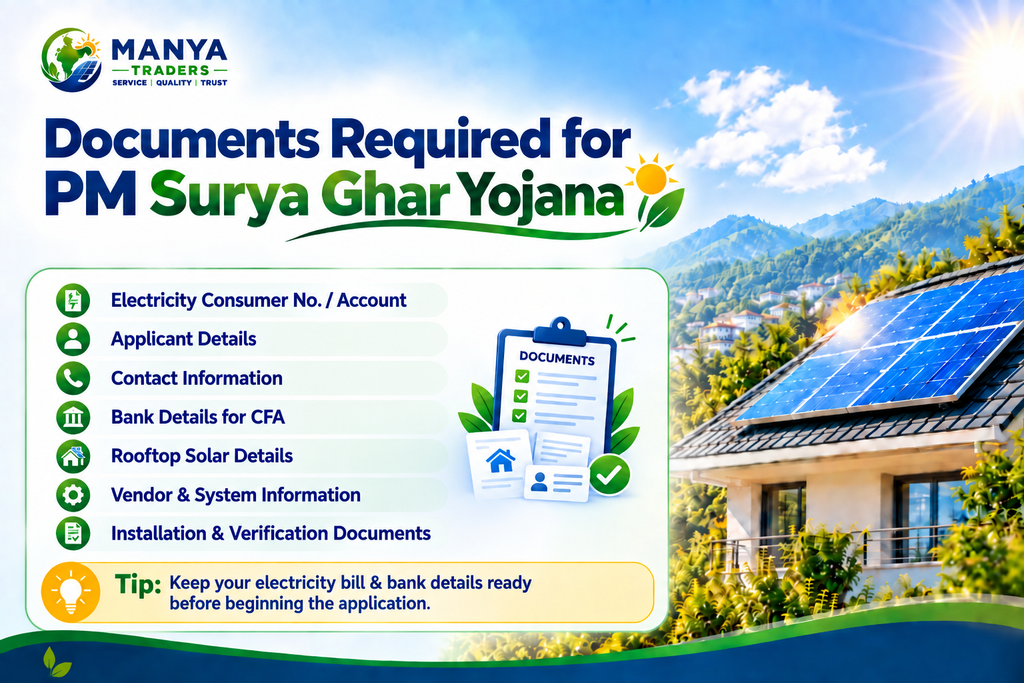
The exact document list can change, so always check the current portal requirements before you submit. You will generally need information related to:
- Electricity consumer number/account
- Applicant details
- Contact information
- Bank account details for CFA processing
- Rooftop solar installation details
- Vendor and system information
- Required installation and verification documents
One practical tip: keep your electricity bill and bank details ready before beginning the application. You can complete the process much more easily when you already organise your basic information.
What Is Different About PM Surya Ghar Yojana in Uttarakhand?
The scheme is national, but installing solar in Uttarakhand is not the same as installing it elsewhere in India. The biggest difference is the property itself.
Hill Areas Need a Proper Roof Assessment
A house in a hill town can have a dramatically different roof from a typical flat-roof house in the plains. Roof slope, nearby hills, trees, shadows, installation access, and mounting conditions can affect the usable solar space.
For example, a roof may look large enough for a 3 kW system, but some areas may get shade during the day. The installer should check the actual roof instead of judging the system size only by roof area. This is especially important in the hilly areas of Uttarakhand.
Dehradun, Haridwar and Haldwani Can Have Different Site Conditions
A home in Dehradun may have different installation conditions from a home in Haridwar or Haldwani. Homes in the plains often have easier roof access and more flat space, but every property is different.
In hilly areas, the roof shape and access can be more important. So, there is no single rooftop formula for all homes in Uttarakhand. Check the property first, then choose the right system size.
UPCL Is Part of the Local Grid Process
For grid-connected rooftop solar, you also need to follow the local electricity process. UPCL provides information about PM Surya Ghar, rooftop solar, and net-metering.
UREDA also provides PM Surya Ghar information and state-subsidy records for Uttarakhand. That’s why it helps to choose an installer who understands both the installation work and the required paperwork.
A 3 kW Example for a Home in Dehradun
Let’s take a simple illustrative example, not a Manya Traders customer case.
Suppose a homeowner in Dehradun has a suitable roof. The homeowner decides a 3 kW rooftop solar system meets the household’s electricity needs.
Under the current Uttarakhand central CFA structure:
First 2 kW: ₹33,000 × 2 = ₹66,000
Third kW: ₹19,800
Total central CFA: ₹85,800
Now assume, purely for illustration, that the complete installed system costs ₹1.80 lakh.
The simple calculation would be:
₹1,80,000 − ₹85,800 = ₹94,200
So the effective project cost after the central CFA would be about ₹94,200.
But don’t use ₹1.80 lakh as a standard market price. Your final quote may change. It depends on the panels, inverter, and mounting structure. It also depends on your roof condition, electrical work, installation, and other parts.
So, check the actual quotation first and then calculate the subsidy.
Can You Install 5 kW or 10 kW Under PM Surya Ghar?
Yes, you can install a system larger than 3 kW if it meets the requirements. However, the central residential CFA does not increase above 3 kW.
For example:
3 kW system → ₹85,800 maximum central CFA
5 kW system → ₹85,800 maximum central CFA
The extra 2 kW in the 5 kW system may still make financial sense. This applies if your household uses enough electricity to benefit from the added generation.
So don’t ask only:
“Which system gets the maximum subsidy?”
Ask:
“Which system matches my electricity consumption and roof?”
That question will usually lead to a more sensible solar decision.
Common Mistakes People Make While Applying
1. Assuming “Solar Installation” Automatically Means “Subsidy”
It doesn’t. The residential CFA has specific eligibility, technical, application, and verification requirements. The residential CFA does not cover commercial, industrial, or government properties. Off-grid systems also fall outside the scope.
2. Using an Old ₹51,000 State Subsidy Calculation
If you find an article saying:
₹85,800 central + ₹51,000 Uttarakhand state subsidy = ₹1,36,800
Don’t use this figure for a new project right away. The state subsidy rules have changed, while UREDA still publishes subsidy records for eligible older projects. Check the current state rules before calculating your expected subsidy.
3. Choosing 3 kW Only Because of the Subsidy
This is one of the most common planning mistakes. If you don’t need 3 kW, paying more just to get the maximum CFA may not make sense. If you use a lot of electricity, choosing only 3 kW to get the full subsidy may not meet your needs.
4. Comparing Quotes Only by the Final Price
Two quotations can look drastically different even when both say “3 kW solar.” Compare:
- Solar panel specifications
- Inverter
- Mounting structure
- DC/AC protection
- Earthing
- Wiring
- Installation work
- Warranty
- Documentation support
- DISCOM coordination
- After-sales service
The cheapest quotation isn’t necessarily the quotation with the lowest long-term cost.
5. Ignoring Shading
A roof may have enough space but still have less usable area because of shade. Check trees, water tanks, nearby buildings, parapet walls, and other obstacles before finalising the solar system layout.
6. Waiting Until Installation is Complete to Check the Paperwork
Don’t. Check your consumer details, vendor eligibility, and required documents before you start. Fixing paperwork issues after installation can be much more difficult.
How to Choose the Right Solar Installer in Uttarakhand
A good solar installer should do more than put panels on the roof. Before booking, ask:
- Is the vendor registered under the PM Surya Ghar process?
- Which panel and inverter models does the quote include?
- What does the total installation price include?
- Who handles the required portal and DISCOM documentation?
- What happens if the installation requires changes after inspection?
- What warranties are included?
- What maintenance support is available?
- How does the system calculate the system size for my electricity consumption?
- Has someone checked the roof for shade and installation conditions?
The PM Surya Ghar guidelines include a five-year maintenance contract from registered vendors. This is subject to the applicable terms.
For homeowners in Uttarakhand, local installation experience can help. Roof conditions can vary from one property to another. This can happen even with the same system size.
At Manya Traders, we help you choose a solar system that fits your power needs and roof conditions, not just the highest subsidy. If you are comparing options, read our guide on solar panel installation in Dehradun. It explains the installation process before you choose a system.
FAQs: PM Surya Ghar Yojana in Uttarakhand
How much subsidy will I get for a 3 kW solar system in Uttarakhand?
For an eligible residential rooftop solar system, the current central CFA in Uttarakhand is ₹85,800 for 3 kW. The calculation is ₹33,000 per kW for the first 2 kW plus ₹19,800 for the third kW.
Is PM Surya Ghar Yojana available in hilly areas of Uttarakhand?
Yes. Eligible residential consumers in hill areas can apply under the scheme if they meet the required conditions. However, roof slope, shade, access, and mounting conditions can make a site check more important. This is often true for homes in hilly areas.
Can I install a 5 kW solar system under PM Surya Ghar?
Yes. You can install a system above 3 kW if it meets all requirements. However, the central CFA stays at the 3 kW level. A 5 kW system therefore does not receive more central CFA than a qualifying 3 kW system.
How do I apply for PM Surya Ghar Yojana online?
Start your application on the official PM Surya Ghar National Portal using your electricity consumer details. Choose an eligible registered vendor, complete the installation, and finish the required verification and metering steps. We process the CFA after you complete these steps.
Is PM Surya Ghar subsidy available for commercial shops or offices?
The residential CFA is for residential consumers. Commercial, industrial, and government properties are not eligible for this residential CFA.
Is the ₹51,000 Uttarakhand state subsidy still available for new solar installations?
Don’t assume that ₹51,000 is available for a new 2026 installation. UREDA publishes updates on state subsidies and disbursement records. Check the current subsidy rules before including this amount in your calculation.
How much subsidy is available under PM Surya Ghar Yojana in Uttarakhand?
Eligible residential consumers in Uttarakhand can get ₹33,000/kW for the first 2 kW and ₹19,800 for the third kW. The maximum central subsidy is ₹85,800 for a 3 kW system.
Who is eligible for PM Surya Ghar Yojana in Uttarakhand?
The scheme is available to eligible residential electricity consumers installing a qualifying grid-connected rooftop solar system. The installation must meet MNRE requirements, including applicable equipment, metering, and verification conditions.
How can I apply for PM Surya Ghar Yojana online?
Apply on the PM Surya Ghar national portal. Enter your electricity connection details. Choose a registered vendor. Then complete the installation. After DISCOM verification and review of the required documents, we process the eligible subsidy.
Can people living in hilly areas of Uttarakhand apply for PM Surya Ghar Yojana?
Yes. Hill-area households in Uttarakhand can apply if they meet the scheme’s eligibility and technical requirements. Roof slope, shading, structural strength, and installation access may affect the system design and cost.
How long does it take to receive the PM Surya Ghar subsidy?
The DISCOM processes the subsidy after you complete the installation, submit the required documents, and finish the verification. The actual time can vary based on the installation, inspection, and local DISCOM process.
Final Word
PM Surya Ghar Yojana in Uttarakhand can make rooftop solar more affordable. But the subsidy should be only one part of your decision. For an eligible residential installation, the current central CFA reaches ₹85,800 at 3 kW. Beyond 3 kW, you can install additional capacity, but the central CFA does not increase.
The smarter approach is to start with your electricity consumption, roof condition, and future requirements. Then choose the system. Compare the full installation cost. Make sure the PM Surya Ghar and DISCOM team complete the process correctly.
If you plan rooftop solar in Dehradun, Kotdwar, Haridwar, Haldwani, or elsewhere in Uttarakhand, Manya Traders can help. We can assess the right system capacity and explain the installation process. This will help you before you commit to a quotation.
Explore Manya Traders’ solar installation service and plan your rooftop solar system around your actual electricity needs.




Solar Panel Installation in Haridwar: Made Simple
October 9, 2026[…] and completes the required documents, metering, and commissioning. Eligible homes may also get a PM Surya Ghar subsidy under the current government […]